Common Ways to Bypass libmsaoaidsec.so's Anti-Frida Protection
About the author. I’m Colin Xiao — an independent reverse engineer, mostly working solo on contract jobs. I dig into compiled code of every kind, including but not limited to: Android and iOS apps, x86/x64/ARM native binaries, packers and obfuscators, DRM and license checks, network protocols and APIs, crypto and signature algorithms, malware, game binaries, and embedded/IoT firmware. I also handle large-scale data collection and vulnerability research. If you have any project in mind, I’d be glad to take it on — whatever it is, as long as it’s within my wheelhouse. Just reach out. You can reach me on X at @colinxiao_lab or on Telegram at https://t.me/ColinXiao666.
This research is published for educational and defensive purposes.
Common Ways to Bypass libmsaoaidsec.so’s Anti-Frida Protection
While studying Android reverse engineering, I kept hitting libmsaoaidsec.so blocking Frida injection. Here I’ve collected a few bypass methods. Corrections welcome.
Hooking pthread_create
After injecting with Frida, the process gets killed right after printing “hello”.
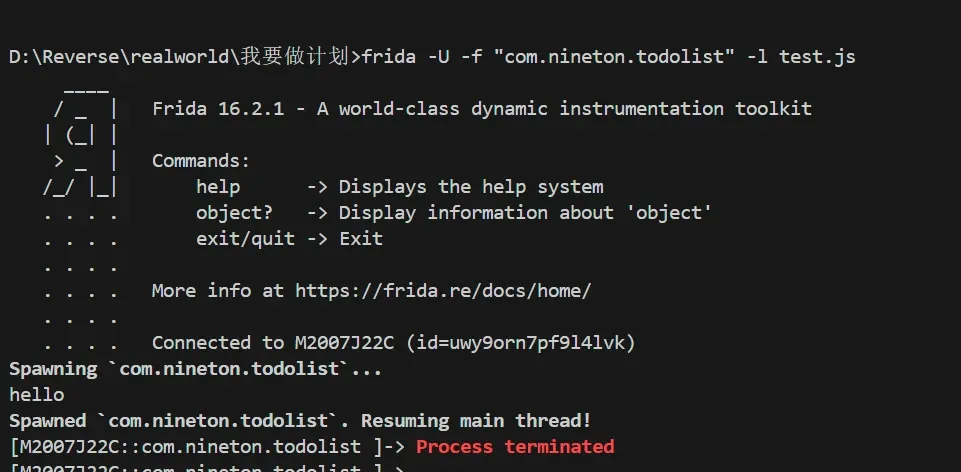 Fig. 1
Let’s see which .so was loaded before it exited:
function hook_dlopen() {
    Interceptor.attach(Module.findExportByName(null, "android_dlopen_ext"),
        {
            onEnter: function (args) {
                var pathptr = args[0];
                if (pathptr !== undefined && pathptr != null) {
                    var path = ptr(pathptr).readCString();
                    console.log("load " + path);
                }
            }
        }
    );
}
It’s easy to guess that libmsaoaidsec.so is the one doing the anti-Frida.
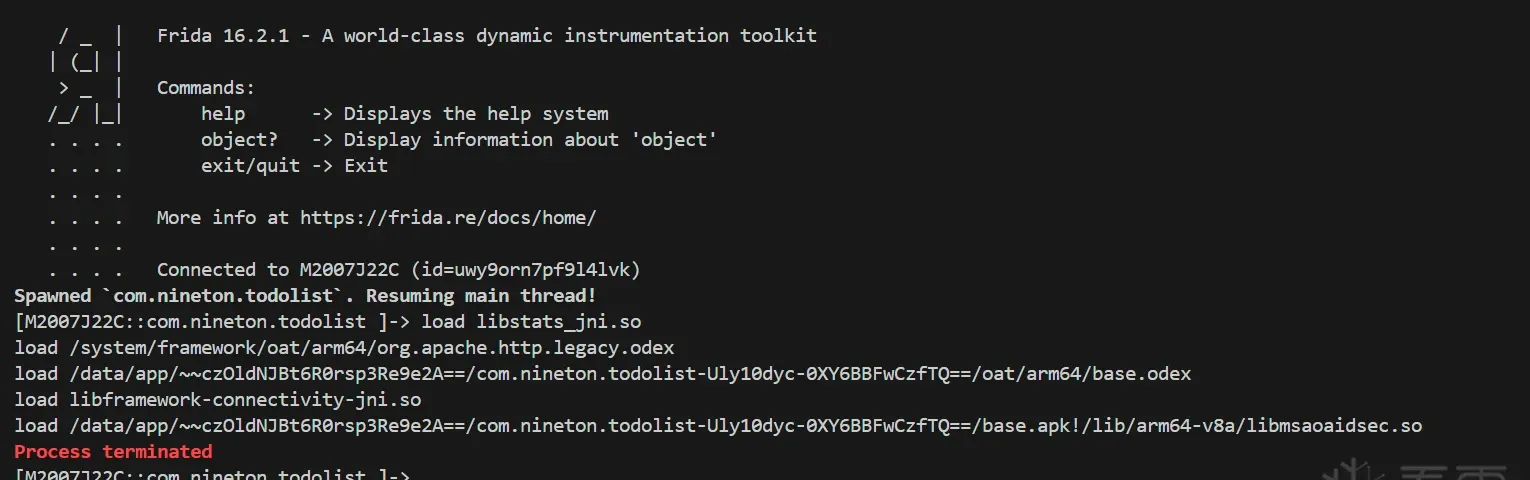 Fig. 2
There are many bypass methods online; most hook pthread_create and NOP out the thread function it creates.
function replace(addr) {
    Interceptor.replace(addr, new NativeCallback(function () {
        console.log(`replace ${addr}`)
    }, 'void', []));
}

function nop_64(addr) {
    Memory.protect(addr, 4 , 'rwx');
    var w = new Arm64Writer(addr);
    w.putRet();
    w.flush();
    w.dispose();
}

function hook_pthread_create(soname) {
    let replaces = [];  // records function offsets that have already been replaced
    // int pthread_create(pthread_t *thread, const pthread_attr_t *attr, void *(*start_routine)(void*), void *arg);
    let pthread_create = Module.findExportByName(null, "pthread_create");
    if (!pthread_create) {
        console.log("pthread_create not found in libc.so");
        return;
    }

    Interceptor.attach(pthread_create, {
        onEnter: function (args) {
            //console.log("hooking pthread_create ", pthread_create)
            let start_routine = args[2];
            //console.log(start_routine)
            let libmsaoaidsec = Process.findModuleByAddress(start_routine);
            if (libmsaoaidsec && libmsaoaidsec.name === soname) {
                if (!replaces.includes(start_routine.toString())) {
                    let libmsaoaidsec_addr = libmsaoaidsec.base;
                    let func_offset = start_routine.sub(libmsaoaidsec_addr);
                    console.log("The thread function offset address in libmsaoaidsec.so(" + libmsaoaidsec_addr + ") is " + func_offset);
                    console.log("replace: " + func_offset);
                    //replaces.push(start_routine.toString());
                    //nop_64(start_routine)
                }
            }
        }
    });
}
setImmediate(hook_pthread_create, "libmsaoaidsec.so")
It successfully hit, but after NOP-ing those three places the app freezes for some reason.
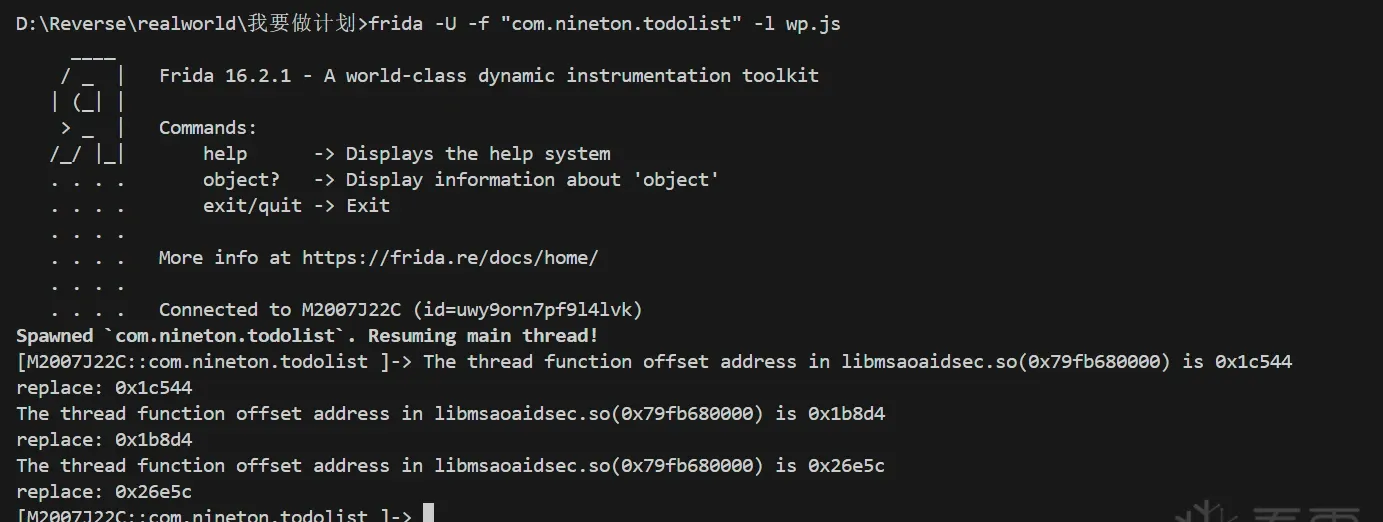 Fig. 3
Hooking clone
Here I found a lower-level approach using clone to detect thread creation.
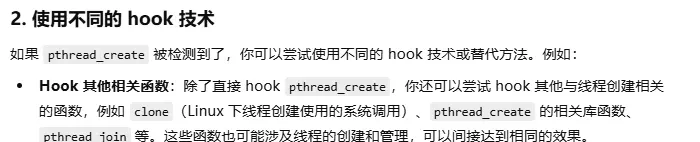 Fig. 4
function hook_clone(soname)
{
    var clone = Module.findExportByName('libc.so', 'clone');
    Interceptor.attach(clone, {
        onEnter: function(args) {
            // args[3] is the child thread's stack address. If 0, it may mean no stack was specified
            if(args[3] != 0){
                var addr = args[3].add(96).readPointer()
                var so_name = Process.findModuleByAddress(addr).name;
                var so_base = Module.getBaseAddress(so_name);
                var offset = (addr - so_base);
                console.log("===============>", so_name, addr,offset, offset.toString(16));
            }
        },
        onLeave: function(retval) {

        }
    });

}

setImmediate(hook_clone, "libmsaoaidsec.so")
This also successfully retrieves the thread function’s address.
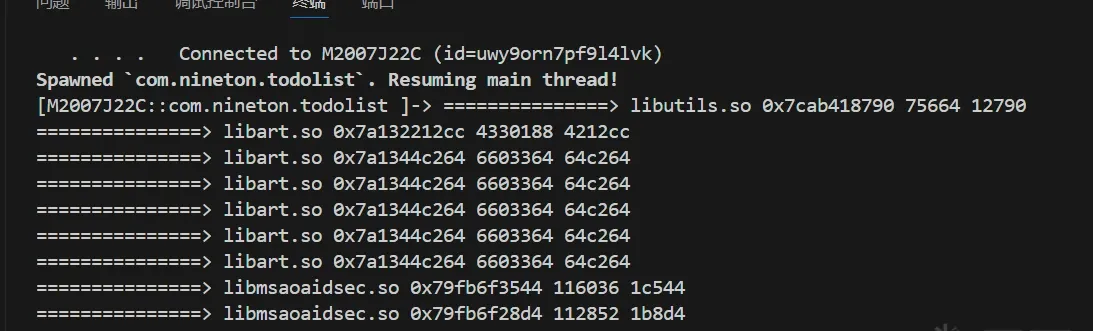 Fig. 5
Hooking strstr
Let’s step into these thread functions to see what they actually do.
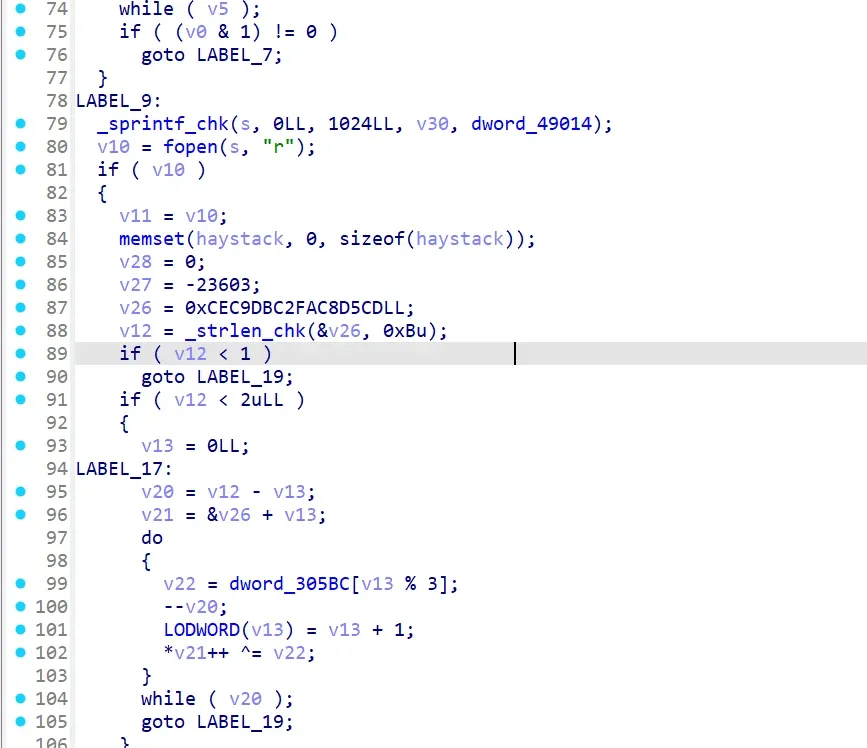 Fig. 6
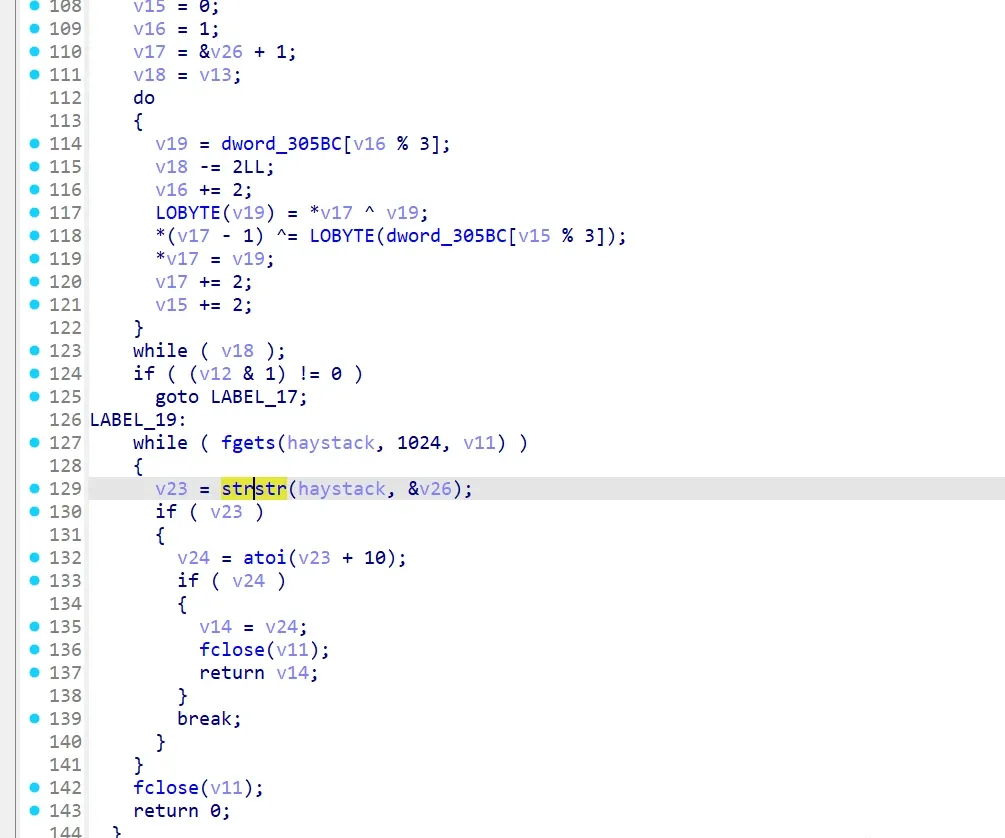 Fig. 7
We can infer that they open some system files, read their contents with fgets, then run key-string detection via strstr.
function hook_strstr_strcmp(soname) {
    var pt_strstr = Module.findExportByName("libc.so", 'strstr');
    var pt_strcmp = Module.findExportByName("libc.so", 'strcmp');

    Interceptor.attach(pt_strstr, {
        onEnter: function (args) {
            var str1 = args[0].readCString();
            var str2 = args[1].readCString();
            if (
                str2.indexOf("REJECT") !== -1 ||
                str2.indexOf("tmp") !== -1 ||
                str2.indexOf("frida") !== -1 ||
                str2.indexOf("gum-js-loop") !== -1 ||
                str2.indexOf("gmain") !== -1 ||
                str2.indexOf("linjector") !== -1
            ) {
                //console.log("strstr-->", str1, str2);
                this.hook = true;
            }
        }, onLeave: function (retval) {
            if (this.hook) {
                retval.replace(0);
            }
        }
    });

    Interceptor.attach(pt_strcmp, {
        onEnter: function (args) {
            var str1 = args[0].readCString();
            var str2 = args[1].readCString();
            if (
                str2.indexOf("REJECT") !== -1 ||
                str2.indexOf("tmp") !== -1 ||
                str2.indexOf("frida") !== -1 ||
                str2.indexOf("gum-js-loop") !== -1 ||
                str2.indexOf("gmain") !== -1 ||
                str2.indexOf("linjector") !== -1
            ) {
                //console.log("strcmp-->", str1, str2);
                this.hook = true;
            }
        }, onLeave: function (retval) {
            if (this.hook) {
                retval.replace(0);
            }
        }
    })
}
setImmediate(hook_strstr_strcmp, "libmsaoaidsec.so")
Simply returning false for these detection points bypasses it just the same.
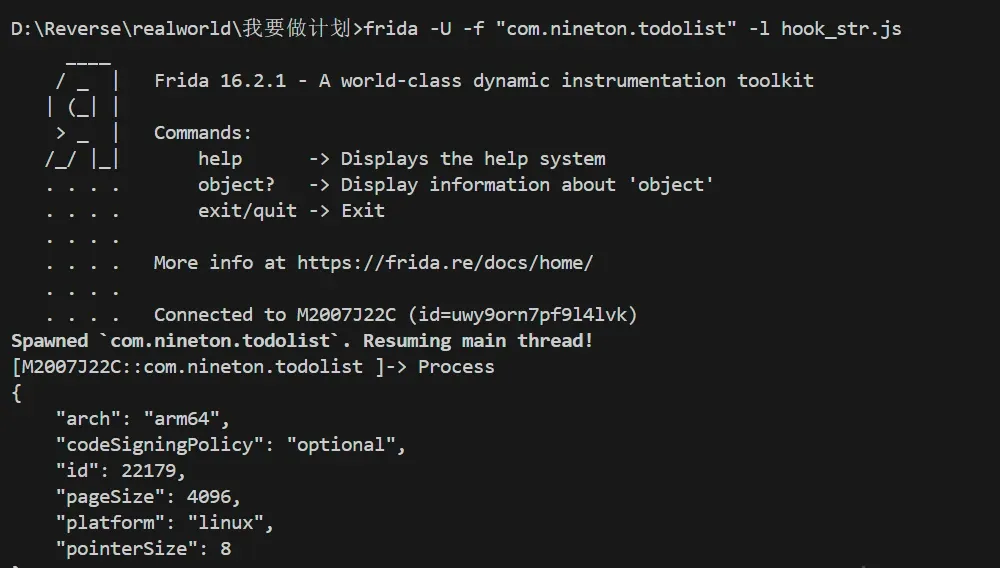 Fig. 8
Modified Frida → rusda
For frida and frida-tools, use the official sources. On the phone, use the release rusda-server-android-arm64 — no need to compile manually.
Using rusda, it bypasses the protection outright.
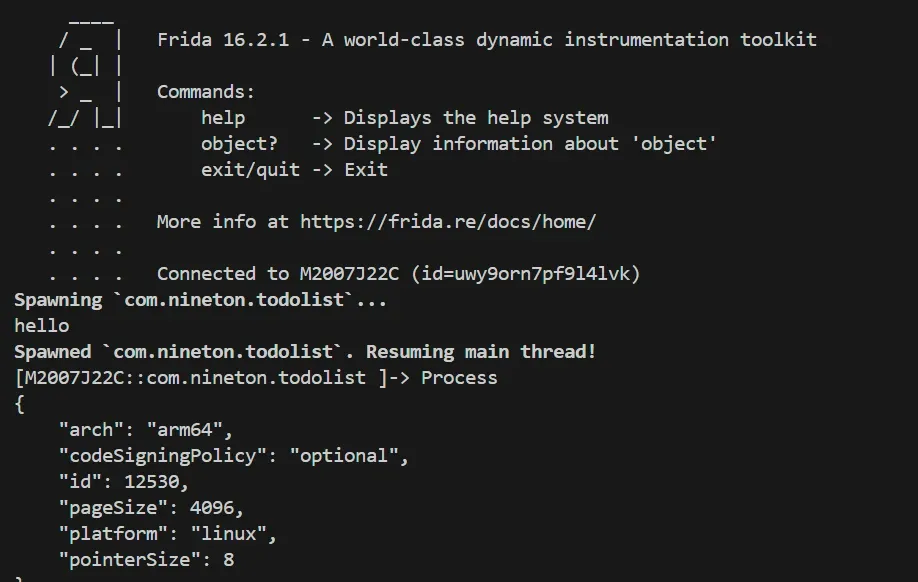 Fig. 9
Colin Xiao — I take on contract reverse-engineering work, and writeups like this are how I show what I can do. If you need help with anything in this space — including but not limited to the areas I cover above — I’m available. No project is too big or too small — if it’s reverse engineering and I can do it, I’ll take it. DM me on X (@colinxiao_lab) or Telegram (@ColinXiao666).
Get in touch